What natural resources does this nation have?
Sweden's main natural resource is iron ore.
What sectors of the economy are the biggest employers?
Services (67%), industry (31%) and agriculture (2%) are the main sectors of the economy that are the biggest employers.
How are economic decisions made? Who makes them?
Mostly businesses, but the government has some influences on things such as public transport, energy and telecommunication.
What the most important industry is in this nation? Is it more labour-intensive or capital intensive?
Services (such as education and health care) is Sweden's most important industry. It is more of a labour intensive industry.
Does this nation use advanced technology in its economy?
Sweden does use advanced technology. One example is automated car manufacturing.
What is one of the major economic problems faced by this nation?
Sweden suffered a severe crisis in the 90's thanks to high and increasing infation. This caused a high unemployment rate (more than 8% in the early 90's). In 1996, the government set out a goal of reducing unemployment down to 4% by the year 2000. This goal was reached that year in Autumn. However, in August 2006, the unemployment rate raised up to 5%.
In what ways is this nation's economy similar to and/or different to Australia's economy?
Australia also has a mixed Economy, which is the same as Sweden's economy. Australia's main industry is also services, but Australia also has another industry, which is mining. Australia is rich in natural resources. Australia is a major exporter of agricultural products such as grains and wool, and minerals, including various metals, coal, and natural gas.
Monday, June 9, 2008

Monday, May 12, 2008
The West Australian Economy
The economy in Western Australia is heavily based on mining, such as iron ore, lead, and gold. Other goods and services provided by WA are agriculture (such as wheat, barley and sheep products), fishing and tourism.
There are several regions located in Western Australia. Each region provides different goods and services. Gascoyne, located north-west of WA, has a diverse economy. Tourism, pastoralism and mining (mainly salt and gypsum) are the main goods and services provided by the Gascoyne region. Goldfields-Esperance, a region located in the south-east corner of WA, provides mining (such as gold and nickel), fishing and agriculture. The Kimberly, located in the northern part of WA, features diverse industries such as pearling, mining (mainly diamonds, zinc and lead), agriculture, and even indigenous art. The Pilbara's economy is dominated by mining and petroleum industries, and also provides tourism. Most of Australia's iron ore comes from the Pilbara.
Western Australia has the highest per capita output than any of the other states, thanks to the economy highly based on extraction and export of mining and petroleum commodities. The average full time income for a Western Australian in 2007 was $61,662, compared to the national average of A$57,387. Western Australia is ranked 2nd behind the Australian Capital Territory. Thanks to its booming economy, this causes a massive rise in property value. The average residential property increased in value by over 40% in 2006. Perth property is now the second most valuable in Australia behind Sydney. Also, the WA economy heavily depends on the countries that they export to.
The Western Australian economy might be deteriorating as there are still labour shortages. This might lead to losing significant economic opportunities. If these economic opportunities are taken, obviously this could increase the WA economy, but might cause the property price to increase even more.
There are several regions located in Western Australia. Each region provides different goods and services. Gascoyne, located north-west of WA, has a diverse economy. Tourism, pastoralism and mining (mainly salt and gypsum) are the main goods and services provided by the Gascoyne region. Goldfields-Esperance, a region located in the south-east corner of WA, provides mining (such as gold and nickel), fishing and agriculture. The Kimberly, located in the northern part of WA, features diverse industries such as pearling, mining (mainly diamonds, zinc and lead), agriculture, and even indigenous art. The Pilbara's economy is dominated by mining and petroleum industries, and also provides tourism. Most of Australia's iron ore comes from the Pilbara.
Western Australia has the highest per capita output than any of the other states, thanks to the economy highly based on extraction and export of mining and petroleum commodities. The average full time income for a Western Australian in 2007 was $61,662, compared to the national average of A$57,387. Western Australia is ranked 2nd behind the Australian Capital Territory. Thanks to its booming economy, this causes a massive rise in property value. The average residential property increased in value by over 40% in 2006. Perth property is now the second most valuable in Australia behind Sydney. Also, the WA economy heavily depends on the countries that they export to.
The Western Australian economy might be deteriorating as there are still labour shortages. This might lead to losing significant economic opportunities. If these economic opportunities are taken, obviously this could increase the WA economy, but might cause the property price to increase even more.
Tuesday, April 1, 2008
Climate change in the UK

Climate change is an issue that could have devastating impacts if we do not stop it. The global temperature over the years have gradually risen, and could rise up to nearly 6 degrees Celsius by the end of century. It may not seem much, but this has a dramatic impact on the global climate. It is important to know about climate change, what will it effect, how to adapt to it and what may happen in the future.
Climate change can increase the frequency and intensity of extreme weather, such as hot spells, droughts and storms. Heat waves in London, 2003, which saw record-breaking temperatures and floods in South Yorkshire, 2007, which caused 3 deaths are just some of the extreme weather over the decade.
Global warming, a specific part of climate change, is the warming up of the Earth's atmosphere over a long period of time. This is caused by harmful greenhouse gases such as carbon dioxide, methane, and nitrous oxide. These greenhouse gases are caused by humans.
These higher temperatures may reduce the water-holding capacitiy of the soils, which will increase the likelihood of soil moisture deficits, especially if precipitation does not increase as well. Higher temereatures may also have a major effect on types of crops, trees or other vegetation that the soils can support. The stability of building foundations and other structures would be affected if summers became drier and the winters became wetter. The increased sea levels and magnitudes of storms, storm surges and waves would caused more frequent coastal flooding.
The climate change will effect the flora and fauna. There may be significant movements of species northwards and to higher elevations. It may be too much for many of the species, especially when trees are to adapt genetically. Many native species and communities may be lost, especially threatened species which occur in isolated damp, coastal or cool habitats. There are also increased chance of invaison and spreading of alien weeds, pests, diseases and viruses.
Agriculture will be effected quite a lot by climate change. The higher temps will cause decreased yields of cereal crops, but potatoes and sugar beet will increase.
We can help by using less electricity, which means we would be cutting down carbon dioxide. We can use reneweable energy sources like solar, wind, and tidal energy. Next time you buy a car, get a hybrid car (uses both electricity and petrol) , as they are very fuel efficent compared to normal petrol cars. Instead of driving to work or school, you can walk, ride, or take the public transport. As the sea levels are rising, we may have to build barriers across rivers to stop floods, and may have to move to higher ground.
As you can see, climate change is an important issue, and we must do anything to stop it from getting worse. The effects and the future effects of climate change can be devastating, so we must adapt to it.
Monday, March 3, 2008
Siberian Tiger
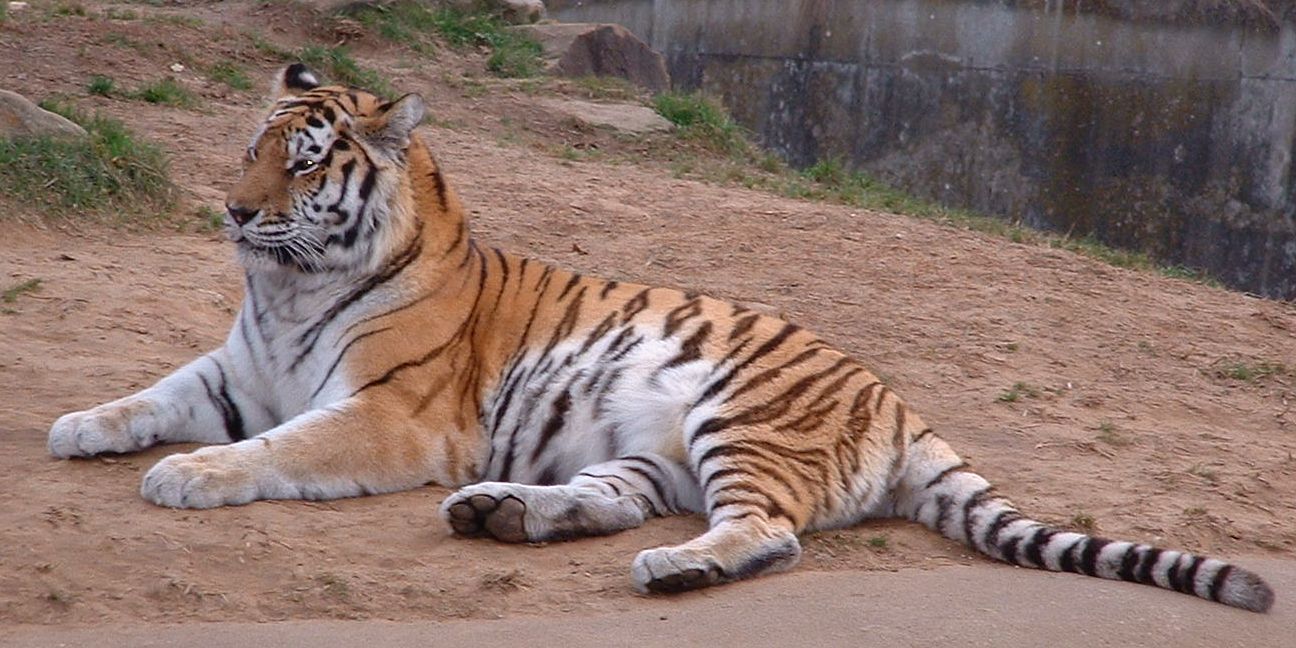
The critically endangered Siberian tiger, also known as the Amur, Manchurian, Korean or North China tiger, is a rare subspecies of the tiger. They are confined to the Amur Region in the Far East, which is now protected. They are considered to be the largest Big Cat in the world.
Their habitats ranges from hot, humid jungles to cold forests. The size of their territories depend on the amount of food availiable, usually about 26 to 78 square kilometres. Tigers usually live alone, but their territories often overlap. A male's territory usually overlaps with several other female territories.
The Siberian tigers are carnivores. They mainly eat wild boar and red deer, which takes about 65% to 90% of their diet. They also eat moose, roe deer, sika deer, musk deer, goral, brown bears and black bears. The tiger's job is to stop these animals from over-populating, which could alter the biodiversity.
The Siberian tigers reach sexual maturity by 3 years of age. They mate any time of the year. The litter size is usually about 3 or 4 cubs, but can be up to 6. There are more females then males, about 2 to 4 females for every male.
Thanks to poaching, habitat loss, and population fragmentation, the population of the Siberian tiger has vastly decreased. In fact, there are only about 450 of them left in the wild. Now, the Amur region (where Siberian tigers are now confined to) is protected, and poaching is now illegal. The Siberian tiger is also bred within the Species Survival Plan, or SSP, where 83 wild tigers were caught. There are now several hundred Siberian tigers of the captive population.
References:
Thursday, February 21, 2008
The Mountain Gorilla

The mountain gorilla, a subspecies of the Eastern Gorilla, is a critically endangered species. There is only around 700 of these gorillas left in the world. These gorilas were threatened from poaching, habitat loss, disease, and war and civil unrest. To conserve these species, frequent patrols in wild life areas and the destruction of poacher equipment and weapons will hopefully save these gorillas from extinction.
Subscribe to:
Posts (Atom)